Freezing doesn’t take the caffeine out
A slush contains whatever went into the vessel. Make it with cola, coffee, tea or an energy drink and every cup carries that drink’s caffeine, just colder. The usual suspects on a slush menu:
- Cola slush — our cola slush is nothing but full-sugar cola.
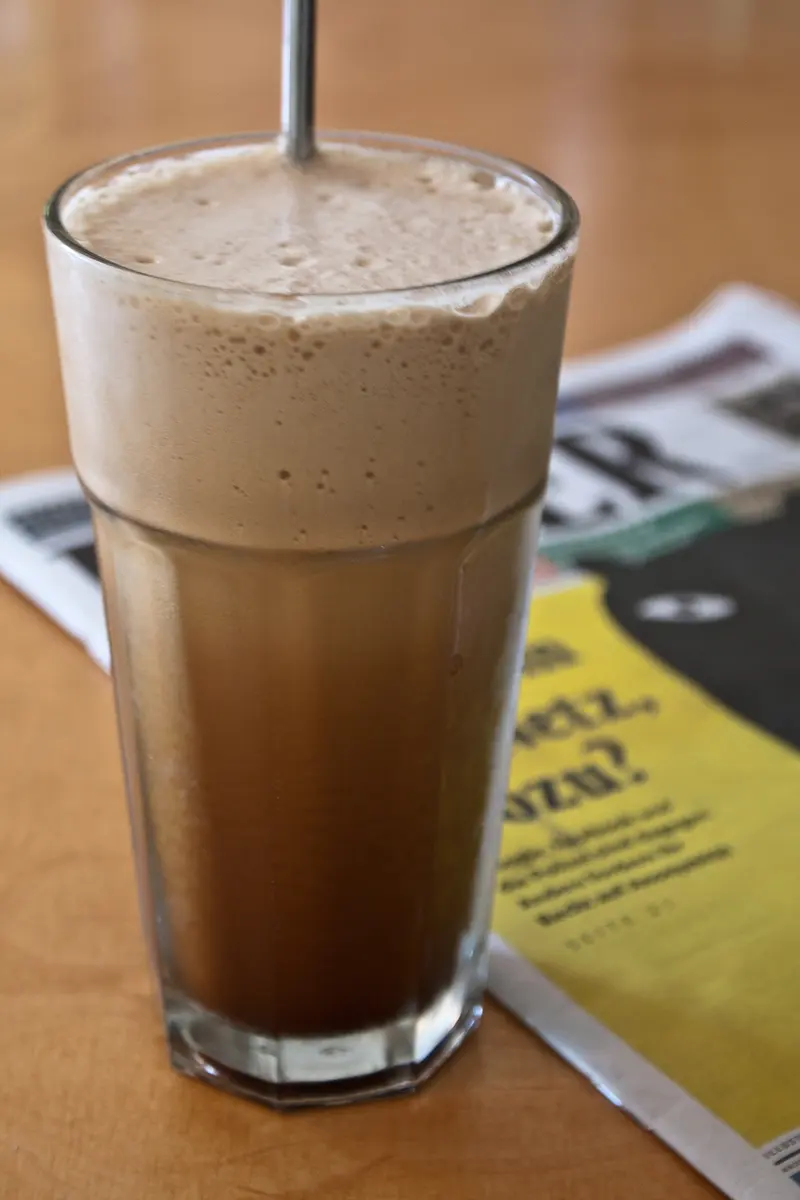
- Coffee frappés — our iced coffee frappé uses 600 ml of strong coffee for six glasses, so each glass holds the coffee from about 100 ml of strong brew. Count it as a coffee, not a milkshake.
- Energy-drink slush — popular, and the strongest of the lot.
- Chocolate — chocolate contains a little caffeine (see the table), so a chocolate milkshake slush made with chocolate sauce may have a small amount.
How much caffeine?
The NHS gives these estimates:
| Food or drink | Caffeine |
|---|---|
| A cup of instant coffee | 100 mg (filter and coffee-shop coffee can contain more) |
| A cup of tea | 75 mg |
| A can of cola | 40 mg |
| A 250 ml can of energy drink | 80 mg |
| A 50 g bar of plain dark chocolate | less than 25 mg |
| A 50 g bar of plain milk chocolate | less than 10 mg |
Our arithmetic for an energy-drink slush: at 80 mg per 250 ml, a 260 ml cup made from the drink alone holds about 83 mg of caffeine — more than two cans of cola.
The “high caffeine” label
Read the can before it goes in the machine. Under UK food labelling law, any drink other than tea or coffee with more than 150 mg of caffeine per litre must carry the words:
‘High caffeine content. Not recommended for children or pregnant or breast-feeding women’
An energy drink at 80 mg per 250 ml works out at 320 mg per litre, so it would be over that line. Mixing it with other drinks dilutes the caffeine, but it also dilutes the sugar the machine needs — see how slush machines work.
Children
- The NHS says tea and coffee are not suitable for babies or young children.
- The Department of Health and Social Care notes that the European Food Safety Authority has not set a safe caffeine intake level for children. Its review of the evidence links high-caffeine energy drinks with headaches, tiredness, stomach aches and shorter, poorer sleep in children — though that research can’t prove the drinks cause them.
- For a children’s slush, pick a caffeine-free flavour: fruit, lemonade or one of our kids’ party recipes. If you use cola, check the label for caffeine first.
The energy-drink sales ban in England
In July 2026 the government confirmed it will ban the sale of high-caffeine energy drinks (over 150 mg per litre, not tea or coffee) to children under 16 in England. It intends the ban to come into force on 6 April 2027, subject to Parliamentary scrutiny, and says it will apply to all retailers — in shops, online, in the eating out-of-home sector, vending machines and individual sellers. Many retailers already stopped selling these drinks to under-16s voluntarily from 2018.
The rules are about selling, but the message for home slush is the same: energy-drink slush is an adults’ drink. If you run a slush stall at a school fair or event in England, the simplest course is not to offer an energy-drink flavour at all — and see our party planning guide for food business registration.
Pregnancy
The NHS advises no more than 200 mg of caffeine a day during pregnancy. A coffee frappé, a cola slush and an energy-drink slush all count towards that, alongside tea, coffee and chocolate. If you’re unsure what is right for you, ask your midwife or GP.
At a party
Treat caffeinated flavours the way we treat frozen cocktails: make the children’s batch first, use a clearly different colour, and label the coffee, cola or energy-drink jug so nobody hands one to a child by mistake.
Sources
- NHS: Foods to avoid in pregnancy (caffeine; page last reviewed 15 June 2026)
- NHS: Drinks and cups for babies and young children
- DHSC: Banning the sale of high-caffeine energy drinks to children — consultation outcome (GOV.UK, updated 16 July 2026)
- DHSC: Banning the sale of high-caffeine energy drinks to children — consultation document (labelling law, evidence)