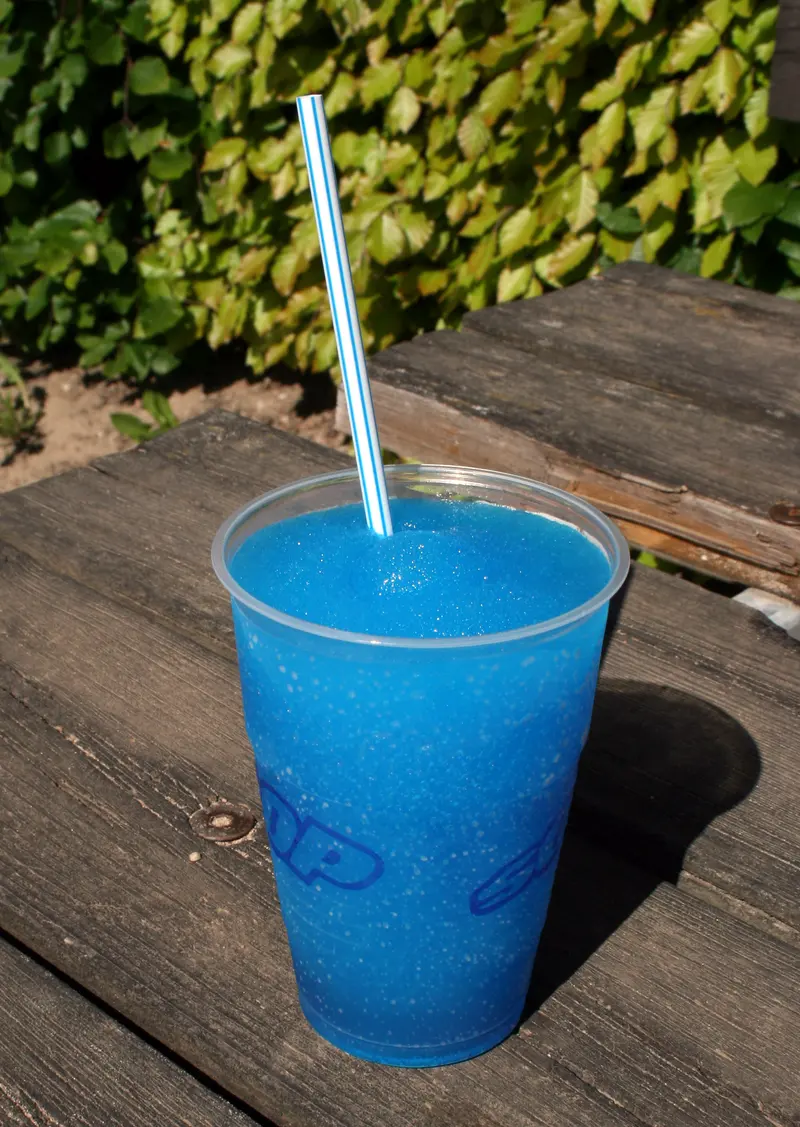
Glycerol and young children: the FSA’s advice
Some slush drinks, syrups and concentrates contain glycerol (E422) instead of some of the sugar. The Food Standards Agency (FSA) explains why it is used:
“Glycerol (E422) is a key ingredient used often in slush ice drinks. It maintains the slush properties to stop the drink freezing solid.”
In guidance published on 16 July 2025 (for England, Wales and Northern Ireland), the FSA says:
“Children aged under seven should not consume these drinks, because they may cause side effects, particularly when consumed in high levels”
“Children aged under 10 should only have one 350ml slush ice drink with glycerol a day.”
The side effects it lists are headaches and sickness, hypoglycaemia (low blood sugar), shock and loss of consciousness. Importantly for anyone making slush at home, the advice is not just about shop slushies:
“This advice also applies to ready-to-drink slush ice drinks with glycerol in pouches and home kits containing glycerol in the slush concentrates.”
Food Standards Scotland updated its own guidance in the same way on 18 June 2025, and also advises that free refills should not be offered to children under 10.
If a child becomes unwell with headaches, nausea or vomiting soon after a slush drink, the FSA says to give them drinks or food containing sugar straight away and call NHS 111. If a child becomes drowsy or confused, call 999.
What this means with a home slush machine
- Home compressor machines such as the Ninja SLUSHi don’t need glycerol: they need sugar. Ninja says everything you pour in must contain at least 4% sugar.
- Ready-made slush syrups are where glycerol turns up. Read the ingredients for “glycerol” or “E422”. The FSA says its presence should be on the label — or contact the manufacturer.
- For children under seven, use glycerol-free, sugar-based recipes such as our classic cherry slush or glycerol-free blue raspberry party slush.
- Read the full FSA guidance and Food Standards Scotland’s update.
Sugar: slush is a treat
Slush machines need sugar to work — Ninja’s minimum is 4% and Tower recommends 5% — so a cup of slush is a sugary drink by design. Our arithmetic for a 260 ml cup:
| Sugar in the mix | Sugar in a 260 ml cup |
|---|---|
| 4% (Ninja’s minimum) | about 10 g |
| 6% | about 16 g |
| 8% | about 21 g |
| 10% | about 26 g |
For comparison, the NHS says children aged 7 to 10 should have no more than 24 g of free sugars a day, children aged 4 to 6 no more than 19 g, and adults no more than 30 g. The NHS also counts the sugars in fruit juice as free sugars, and warns that too much sugar can cause tooth decay. See the NHS guide to sugar.
- Serve children small cups (150 ml is plenty) and offer water too.
- Don’t try to “fix” a low-sugar slush for children with a glycerol syrup — see above.
- Our sugar-free and low-sugar guide explains what does and doesn’t work.
Allergens
UK food law names 14 allergens that food businesses must tell customers about: celery, cereals containing gluten, crustaceans, eggs, fish, lupin, milk, molluscs, mustard, peanuts, sesame, soybeans, sulphur dioxide and sulphites (above 10 parts per million) and tree nuts. Making slush for friends isn’t a business, but the same list is a useful checklist. In slush the usual suspects are:
- Milk — frappés, milkshakes and lassis.
- Sulphites — wine (so frozé), and some squashes and bottled lemon juice use them as preservatives.
- Soya and nuts — some chocolate sauces and flavoured syrups; check the label.
Wash the vessel and auger between a dairy batch and a dairy-free batch, and tell guests what is in each flavour. The FSA’s allergy advice for consumers and the NHS food allergy page have more.
Alcohol and children
Frozen cocktails look exactly like children’s slush. Keep them apart:
- Make the alcohol-free batch first, serve it, then clean the machine before making a cocktail batch.
- If you use a twin-vessel machine for both, give them clearly different colours (we use blue for children and red or green for adults) and let an adult pour the cocktail side.
- Label adult cups, and keep bottles and leftover cocktail slush out of reach.
The law is clear: it is illegal to sell alcohol to anyone under 18, and illegal to give alcohol to children under 5 (GOV.UK). For adults, the UK Chief Medical Officers advise not drinking more than 14 units a week on a regular basis, spread over three or more days (guidelines), and the NHS advises not drinking at all if you are pregnant or planning a pregnancy (NHS). Every cocktail recipe on this site shows its UK units; for help and facts see Drinkaware.
Cleaning and hygiene
- Follow your machine’s manual. Ninja’s rinse cycle stirs the vessel without cooling to help clear it; you still take the vessel apart and wash it.
- Dairy slush: Ninja’s claim that drinks stay frozen for up to 12 hours is for recipes without dairy. Serve frappés and milkshakes promptly and clean the machine afterwards.
- Don’t top up an old batch with a new one — empty, clean and start again.
- Only put parts in the dishwasher if the maker says they are dishwasher safe, and let everything dry before reassembling.
- Empty the condensation catch and drip tray.
More in cleaning & troubleshooting.
Electrical safety
- Use the machine only as the maker instructs, on a flat, dry worktop away from the sink.
- Leave space for air to flow — Tower, for example, asks for an 8–10 cm gap all round its Slushie Fusion.
- Buy UK models. When we checked Amazon.co.uk in October 2026 we found a US-model Ninja SLUSHi MAX (FS605SG) listed; UK Ninja model numbers end in “UK”.
- Register your appliance so you hear about recalls — with the maker or through Register My Appliance — and check GOV.UK product safety alerts and recalls.
- Electrical Safety First, the UK electrical safety charity, has more advice.
Not medical advice. This page summarises official UK guidance for general information. If you are worried about a child or adult who is unwell, call NHS 111, or 999 in an emergency.
Sources
- Food Standards Agency: Glycerol (GOV.UK, published 16 July 2025)
- Food Standards Scotland: updated guidance on glycerol in slush ice drinks (18 June 2025)
- NHS: How does sugar in our diet affect our health?
- FSA: Food allergy and intolerance advice for consumers (GOV.UK)
- GOV.UK: Alcohol and young people
- UK Chief Medical Officers’ low risk drinking guidelines (2016)
- NHS: Drinking alcohol while pregnant
- Ninja UK support: SLUSHi sugar requirements
- Ninja UK support: SLUSHi presets (rinse cycle)
- Tower: Slushie Fusion product page (ventilation, 5% sugar)