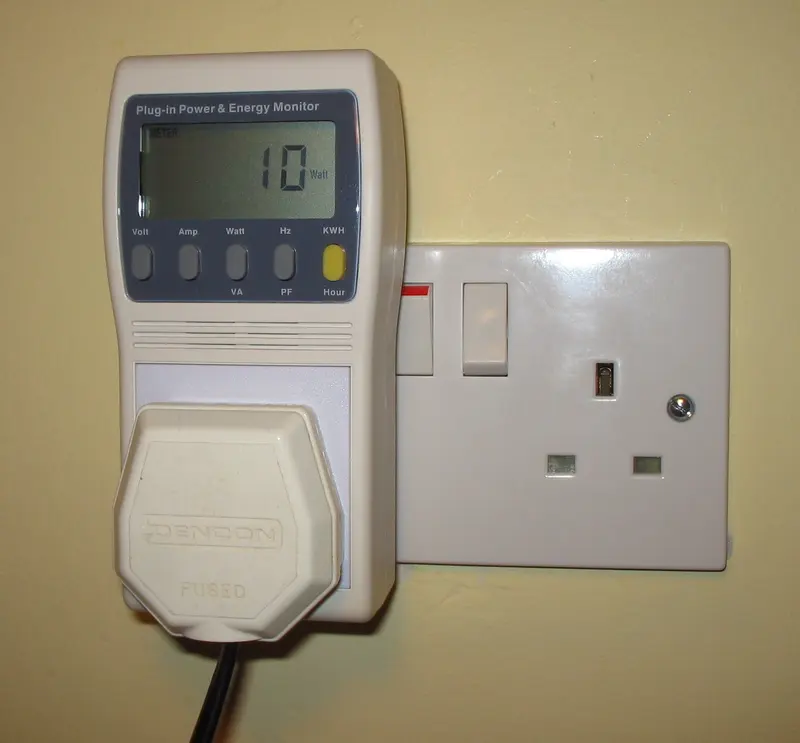
With energy bills still on many people's minds this winter, it is a fair question: how much electricity does a slush machine use? The honest answer is that nobody can give you an exact figure for your kitchen, but you can work out a sensible estimate in a couple of minutes.
This is a worked example, not a measurement. We haven't metered any machine; the figures below come from the makers' own power ratings and Ofgem's published price cap.
The sum
Electricity is billed in kilowatt-hours (kWh). One kWh is 1,000 watts used for one hour. So:
- Energy (kWh) = power (watts) × hours ÷ 1,000
- Cost = energy (kWh) × your unit rate (pence per kWh)
The power figure is usually on the rating plate under the machine and in the manual. Where the maker publishes it, it is on our machine pages too:
- Ninja SLUSHi Frozen Drink Maker Sugar: At least 4% sugar in everything you pour in (Ninja UK support)
- Ninja SLUSHi with SlushAssist Technology Sugar: Must include sugar or sugar alternatives (Ninja). Ninja’s published figure for the original SLUSHi is at least 4%.
- Ninja SLUSHi XL Frozen Drink Maker Sugar: Must include sugar or sugar alternatives (Ninja)
- Ninja SLUSHi MAX Frozen Drink Maker Sugar: Must include sugar or sugar alternatives (Ninja)
- Ninja SLUSHi Twist Frozen Drink Maker Sugar: Requires sugar or sugar alternatives; the machine tells you when to add more water or sugar (Ninja)
- Tower Slushie Fusion 2.6 Litre 5-in-1 Frozen Drinks Maker Sugar: A juice or soft drink with a minimum of 5% sugar for best and quickest results; not diet or zero/low-sugar drinks (Tower)
- Tower Slush ’n’ Whip Soft Serve & Frozen Drinks Maker Sugar: Not stated as a figure; FreezeIQ monitors sugar content (Tower)
- Cuisinart Frost Fusion Frozen Drinks & Soft Serve
The time is how long the machine runs: the freezing time plus however long you leave it holding the slush. Makers quote freezing times as ranges (often 15 to 60 minutes, depending on what you put in and how cold it is to start with) and these appear on each machine page as the maker's claim.
A worked example
Take a machine rated at 200 watts that runs for one hour:
- 200 W × 1 hour ÷ 1,000 = 0.2 kWh
Ofgem's price cap for 1 October to 31 December 2026 gives an average Direct Debit electricity unit rate of 26.32p per kWh across England, Scotland and Wales. At that rate:
- 0.2 kWh × 26.32p ≈ 5.3p for the hour
A machine rated at 280 W, running for the same hour, would use 0.28 kWh, or about 7.4p at the same rate. If you keep the slush frozen for an afternoon, multiply by the number of hours.
Why the real figure is usually lower
The watts on the rating plate are the most the machine draws. A compressor machine doesn't run flat out the whole time: once the slush is frozen, it cycles on and off to keep it there, while the motor keeps stirring. So the sum above is a ceiling rather than a typical figure.
Things that make the real figure higher or lower:
- Starting temperature. Pouring in a mix straight from the fridge means less work than a mix at room temperature. Chilling the mix in advance (see making slush mixes ahead) is the single easiest saving.
- Volume. A full vessel takes longer than a half-full one.
- Sugar and alcohol. Both lower the freezing point, so a strong mix takes longer to freeze. How slush machines work explains why.
- The room. Machines need space around the vents; a machine wedged against a wall or near the oven has to work harder.
Your own unit rate
The 26.32p figure is an average. Ofgem's tables show different rates by region, and fixed tariffs, prepayment and Economy 7 are different again. Your bill or app will show your own unit rate, and that is the one to use.
The price cap also changes every three months; Ofgem announces each new level ahead of time on its price cap page. The figures here are for October to December 2026.
The standing charge (an average of 54.83p a day on Direct Debit for the same period) is paid whether or not you use the machine, so it doesn't belong in the cost of a batch.
Putting it in context
Whichever machine you have, an hour of slush is likely to cost a few pence of electricity at current rates. The bigger costs over a year are usually the ingredients and, for a machine that sits idle, the cupboard space. For commercial two-bowl granita machines, which are far more powerful and designed to run all day, the sums are very different; see our guide to commercial granita machines.
General information only. This article summarises official UK guidance and the makers’ own information; it isn’t medical, legal or financial advice. Follow your machine’s manual. If you are worried about someone who is unwell, call NHS 111, or 999 in an emergency.
Sources
- Ofgem: Energy price cap
- Ofgem: Get energy price cap standing charges and unit rates by region (1 October to 31 December 2026)
Checked: