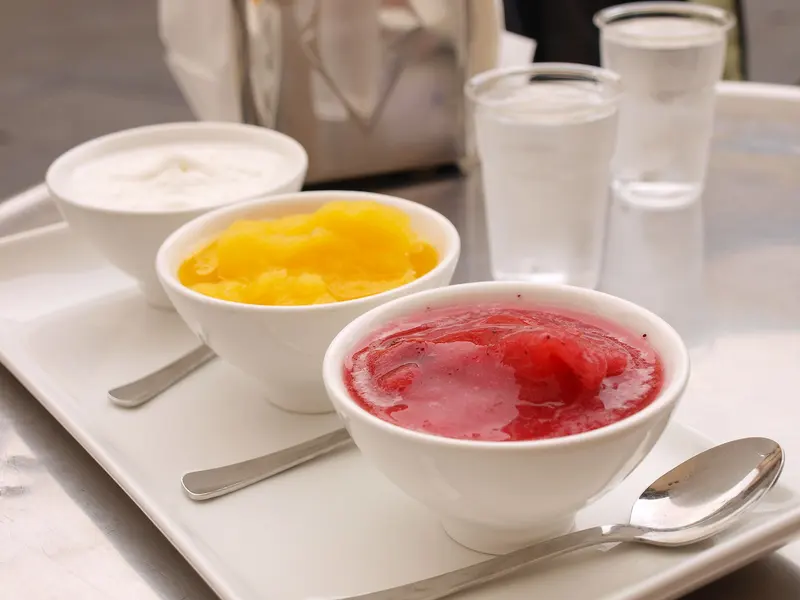
You don’t need a machine
A slush machine makes fine, even ice crystals because it chills and stirs the drink at the same time — see how slush machines work. Without one you can get close by doing the stirring yourself. The result is coarser and flakier, more like an Italian granita than a shop slush, but it is cheap, needs no special kit and is a good way to find out whether a household would really use a machine.
The same rule: it needs sugar
Sugar is what stops a drink freezing into a solid block, in the freezer as much as in a machine. A diet or zero-sugar drink frozen in a tray turns into hard ice that you have to chip at, not slush. Slush machine makers set a minimum sugar level for that reason (the figures are in how slush machines work), and the same mixes are a sensible starting point for the freezer. Our calculator works out the sugar level of a mix.
Don’t go much higher than you need, though. A slush made without a machine is still a sugary drink.
The freezer-and-fork method
- Mix and chill the drink. Use a recipe that would work in a machine, such as our fresh lemonade slush or watermelon & lime slush mix, and chill it in the fridge first.
- Pour it into a shallow container — a metal baking tin or a freezer-safe plastic box — so the layer is only a few centimetres deep. A shallow layer freezes faster and more evenly.
- Freeze, then scrape. When ice starts to form around the edges, take it out and drag a fork through it, breaking up the crystals and pulling the frozen edges into the middle.
- Repeat every so often until the whole tray is a mass of loose, fluffy ice crystals. The more often you scrape, the finer the texture.
- Serve straight away into chilled cups, with a spoon straw.
If it sets too hard, leave it on the side for a few minutes and scrape again.
Using a blender
Blending a chilled drink with ice gives a thicker, frothier frozen drink in a couple of minutes. Two things to know:
- Check the manual first. Not every blender is made to crush ice; follow the maker’s instructions on ice and on how long to run it.
- Ice waters the drink down. As the ice melts, it dilutes both the flavour and the sugar, so a blended drink is often a little weaker and icier than a machine slush.
Slushy squeeze cups
Squeeze cups are chilled in the freezer, then you pour in a cold drink and squeeze the sides to turn it slushy. They make one drink at a time, so they suit a single child’s treat rather than a party. Follow the maker’s freezing time, and see the cups & straws shelf.
Keeping it safe
- Glycerol syrups. Some ready-made slush syrups contain glycerol (E422). The Food Standards Agency advises that children under seven should not have slush drinks containing glycerol, and that children under 10 should have no more than one 350 ml glycerol slush a day — and its advice covers home kits too. A home-made mix of juice or a sugary drink doesn’t need glycerol. See the safety guide.
- The freezer. The FSA says freezers should be kept at around −18°C. Freezing pauses bacteria but doesn’t kill them, so make the mix with clean equipment, label anything you keep and use it up rather than leaving it to linger. Our post on making slush mixes ahead has more on chilling and leftovers.
- Sugar. The NHS says children aged 4 to 6 should have no more than 19 g of free sugars a day, and those aged 7 to 10 no more than 24 g. Small cups help — see slush and children’s teeth.
- Alcohol. Alcohol lowers the freezing point a long way, so boozy mixes may never set in a home freezer. Keep any adult version clearly apart from the children’s, and see frozen cocktails.
When a machine makes sense
If you find yourself scraping a tray every weekend, a machine will give a smoother slush with far less effort. Our buying guide and the machines table compare the makers’ own figures.