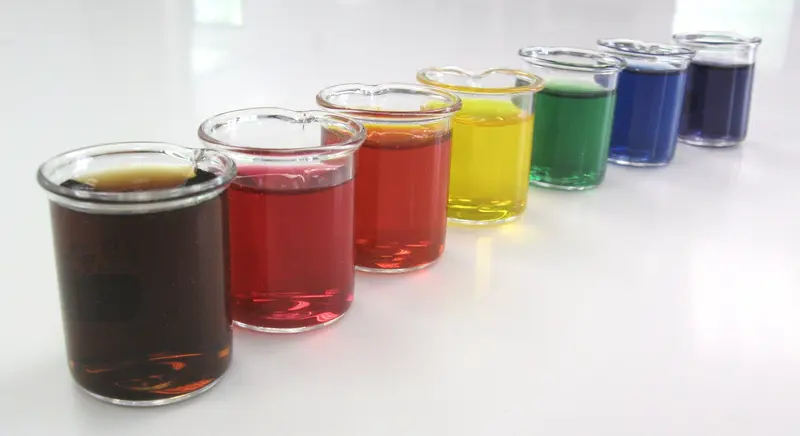
Part of the fun of slush is the colour: electric blue, cherry red, lurid green. But if you've looked closely at some brightly coloured food and drink, you may have seen a line on the label: "May have an adverse effect on activity and attention in children." Here is what that warning means, which colours it applies to, and how to make a party slush that is still bright without them.
This post explains UK labelling for general information. It isn't medical advice — if you're worried about a child's behaviour or diet, talk to your GP or health visitor.
Where the warning comes from
The Food Standards Agency (FSA) explains that it funded research into possible links between food colours and hyperactivity in children. In the FSA's words, the research "found that consuming certain artificial food colours could cause increased hyperactivity in some children."
As a result, six colours now carry a labelling requirement. The FSA lists them as:
| Colour | E number |
|---|---|
| Sunset yellow FCF | E110 |
| Quinoline yellow | E104 |
| Carmoisine | E122 |
| Allura red | E129 |
| Tartrazine | E102 |
| Ponceau 4R | E124 |
The FSA says: "Food and drink containing any of these six colours must carry a warning on the packaging. This will say 'May have an adverse effect on activity and attention in children'."
They aren't banned
It's worth being clear about what the warning does and doesn't mean. The colours are permitted; the rule is that products using them must say so with that warning. The FSA says it encourages manufacturers to work towards finding alternatives to these colours.
The FSA also adds an important point of balance: "hyperactivity can also be caused by other things", so being careful about what a child eats "may help manage hyperactive behaviour but it may not stop it."
What it means for slush syrups
Slush syrups and squashes are among the most brightly coloured things in the kitchen cupboard. Whether a particular one uses any of the six is shown on its label, and recipes can change, so read the label on the bottle you're actually using:
- Look for the warning sentence on the packaging.
- Check the ingredients for the six names or E numbers above.
- If you're buying for a party, check every bottle, not just the first one.
Remember that the colour warning is separate from sugar and from glycerol. A syrup without the warning can still be very sugary, and some slush syrups use glycerol, which our slush safety guide explains in detail for children. Our post on slush syrup for a home machine covers the glycerol advice, the sugar and the mixing ratio together.
Bright slush without the six
If you'd rather avoid those colours, a few of our recipes get their colour from fruit or from the drink itself:
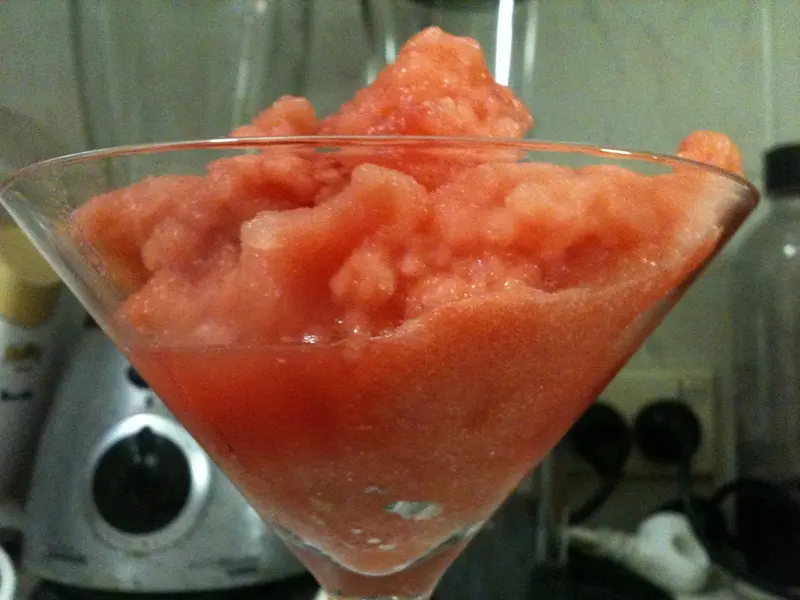
- Watermelon and lime is naturally pink.
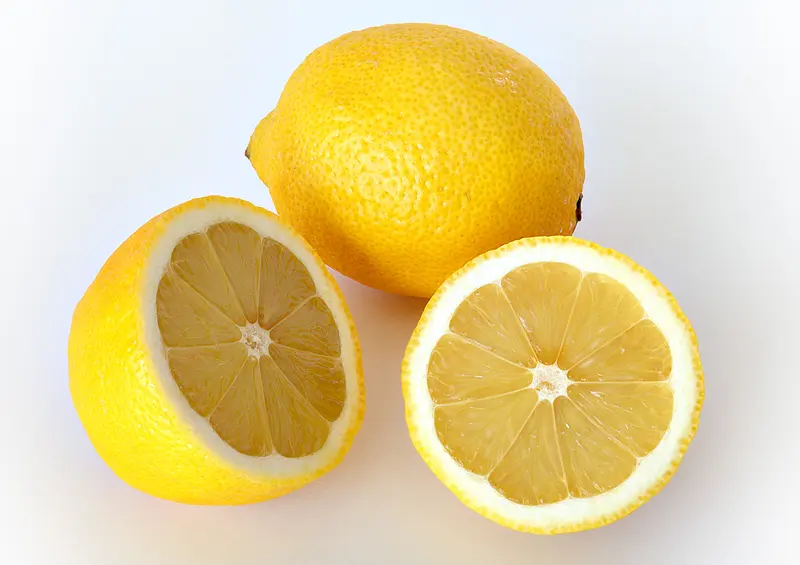
- Fresh lemonade slush is made with lemon juice and sugar, so it is pale rather than neon.
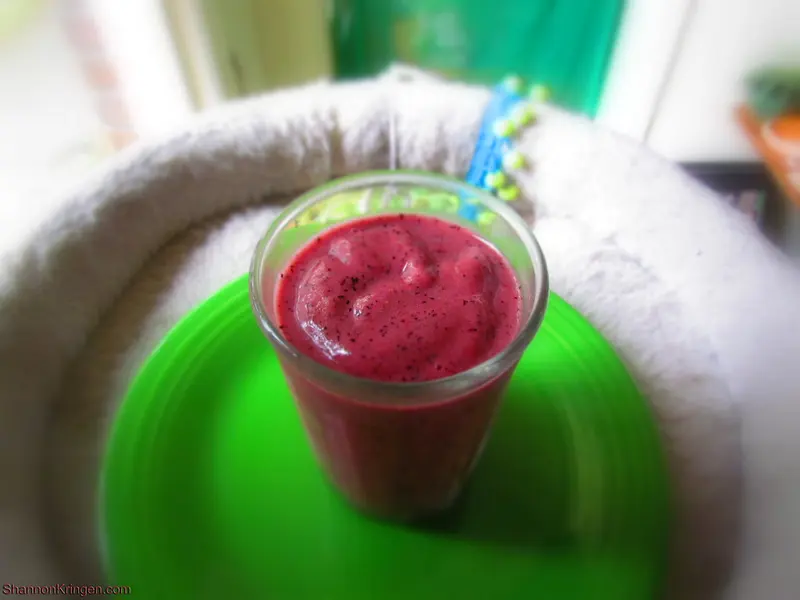
- Apple and strawberry frozen juice gets its colour from the fruit.
- Cherry slush made with a squash or cordial will only be as red as the squash — check its label too.
Fruit slushes
Watermelon & lime slush
Blitzed watermelon with lime and a little sugar — summery, pink and properly slushy.
Citrus & lemonade
Fresh lemonade slush
Sharp, proper lemonade slush from lemons, sugar and water — no fizz needed.
Photo: André Karwath aka Aka, CC BY-SA 2.5
Fruit slushes
Apple & strawberry frozen juice
Just juice and fruit: apple juice with strawberry purée, on the Frozen Juice setting.
Photo: shannonkringen, CC BY-SA 2.0
Fruit-based slushes still need enough sugar to freeze properly in a home machine, so use the calculator to check the mix. And fruit juice counts as free sugar, so our guide to fruit juice slush and your 5 A Day is worth a read too.
Colours that help at a party
There's one place where a strong colour is genuinely useful: telling drinks apart. If you're making an adult slush and a children's slush on the same day, our safety advice is to give them clearly different colours and let an adult pour the cocktail side. If you're avoiding the six colours, you can still do that with fruit: a pink watermelon slush for children and a pale lemon one for adults, in different cups.
Teeth, too
Whatever the colour, slush is sugary by design. Smaller cups, drinking it in one go rather than sipping all afternoon, and having it with a meal all help, as our guide to slush and children's teeth explains.
General information only. This article summarises official UK guidance and the makers’ own information; it isn’t medical, legal or financial advice. Follow your machine’s manual. If you are worried about someone who is unwell, call NHS 111, or 999 in an emergency.
Sources
Checked: