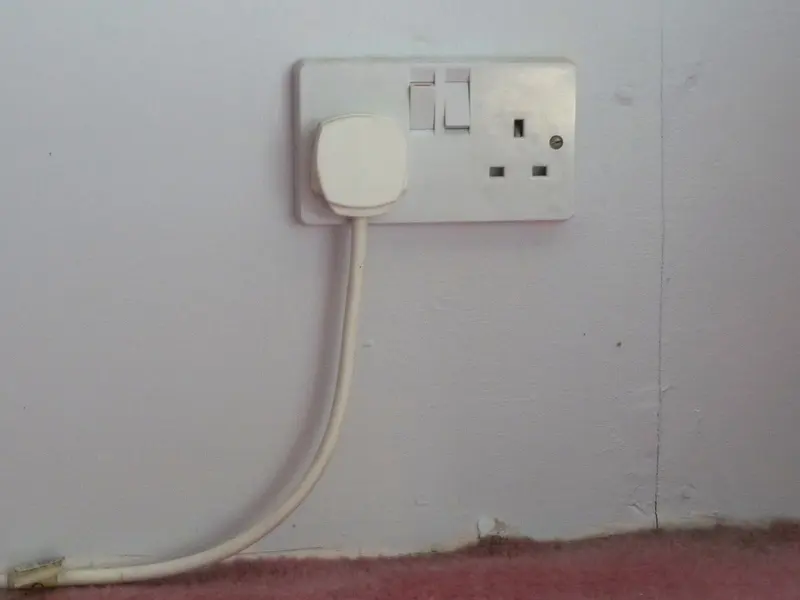
A home slush machine is a big, heavy box that needs a socket, and at Christmas the kitchen worktop is already full: kettle, toaster, air fryer, the coffee machine someone got last year. It's tempting to stand the slush machine wherever there's a gap and run it from an extension lead. Here is what the charity Electrical Safety First says about kitchen appliances and extension leads, and how it applies to a slush machine.
This is general safety information. Always follow the instructions in your machine's manual, which take priority over anything here.
Keep it away from the sink
Electrical Safety First says socket-outlets and switches should be fitted at a safe distance from the sink, and suggests at least 30cm horizontally where possible. It also warns against touching switches or electrical equipment with wet hands.
A slush machine involves a lot of liquid: filling the vessel, pouring, rinsing, cleaning drips. So a spot a little away from the sink, with dry hands when you plug in or switch on, is the sensible choice. Fill the vessel with a jug if the machine can't sit near the tap safely.
Give it room to breathe
Electrical Safety First's kitchen advice says not to store things inside or on top of appliances such as microwaves, because it "can block ventilation and can cause fire or overheating". A slush machine has its own freezing system inside, so check your manual for how much space it needs around it, and don't stack tea towels, recipe books or the Christmas post on top.
Extension leads: check the rating
If there's no free wall socket where you want the machine, Electrical Safety First's advice on extension leads and overloading is the bit to read:
- Check the lead's rating. Most extension leads are rated at 13A, but it says older leads and many cable reels may be 10A or less. The rating is usually on the back or underside of the lead, or the front of a cable reel; if not, check the instructions.
- Don't exceed it. Don't plug in appliances whose combined draw is more than the lead's maximum. It warns that overloading sockets "creates a risk of fire".
- Never plug one extension lead into another. This "daisy-chaining" can make the plug in the wall socket overheat.
- Unwind cable reels fully. It says a wound-up cable reel's rating can drop to just 3 or 4A.
Electrical Safety First has an online socket overload calculator on the same page, which lets you add up the appliances you plan to plug in.
How much does a slush machine draw? Our machine pages list the makers' power figures. For the dedicated slush machines we list with a power figure, it runs from about 180 to 280 watts. That is modest on its own, but what matters is the total on one lead. A slush machine sharing a four-way with a kettle, a toaster and an air fryer is a different picture from a slush machine on its own.
- Ninja SLUSHi Frozen Drink Maker Sugar: At least 4% sugar in everything you pour in (Ninja UK support)
- Ninja SLUSHi with SlushAssist Technology Sugar: Must include sugar or sugar alternatives (Ninja). Ninja’s published figure for the original SLUSHi is at least 4%.
- Ninja SLUSHi XL Frozen Drink Maker Sugar: Must include sugar or sugar alternatives (Ninja)
Look after the plug and cable
Electrical Safety First suggests checking leads and appliances are in good condition before use, and gives warning signs to stop and unplug for: burn marks, arcing (buzzing or crackling), blown fuses, tripped circuit-breakers, or a product that's hot to touch. If you notice any of those, contact the retailer, the manufacturer or a qualified repair technician.
Other habits it recommends that fit a slush machine well:
- Don't clean or repair an appliance while it's plugged in. Unplug before you take the vessel off to wash it; our cleaning guide covers the rest.
- Don't leave appliances on and unattended. A slush machine can hold a batch for a while, but switch it off and unplug it when the party's over or you go out.
- Don't wrap the cable around an appliance while it's still warm, and keep trailing cables out of the way, especially where children are about.
Register it
Electrical Safety First recommends registering all your electrical appliances, so the maker can contact you if there's a problem. It says products are recalled more often than people think, but the response to recalls is often "worryingly low". If your machine was a present, see our post on giving a slush machine for Christmas for how to register it.
Party checklist
- A spot on the worktop away from the sink.
- Space around it, nothing on top.
- A wall socket if possible; if not, a 13A lead that isn't shared with high-power appliances, fully unwound, never daisy-chained.
- Dry hands at the switch.
- Unplugged to clean, and switched off when no one's around.
For the rest of the party plan — batches, timings and keeping adult and children's slush apart — see slush party planning.
General information only. This article summarises official UK guidance and the makers’ own information; it isn’t medical, legal or financial advice. Follow your machine’s manual. If you are worried about someone who is unwell, call NHS 111, or 999 in an emergency.
Sources
- Electrical Safety First: Kitchen (updated 28 June 2026)
- Electrical Safety First: Overloading sockets (updated 28 June 2026)
- Electrical Safety First: Plugs and fuses (updated 26 June 2026)
Checked: